
Illinois's humid continental climate is one of the most mold-friendly in the country. Summer dew points sit in the 70s for weeks, winter humidity swings widely depending on heating, and the combined sewer overflows of older Chicago neighborhoods keep basements and crawls damp for days after every heavy rain. Mold doesn't need much: a porous surface, organic material (drywall paper, dust, wood), and surface humidity above about 60 percent for more than 24 hours.
The good news is that mold prevention in Chicago homes follows a small handful of high-leverage habits. This guide covers what causes the bulk of our mold remediation calls, the EPA's 10 square foot DIY threshold, and the inspection cadence that prevents almost every avoidable case.
Mold needs three things
Mold spores are present in every Illinois home. Colonization needs a food source (cellulose: drywall paper, wood, dust), moisture, and time. Remove any one of those three and growth stops. In Chicago homes, moisture is almost always the controllable variable.
Where Chicago homes commonly grow mold
- Basement perimeter walls below grade where groundwater pressure pushes through block.
- Crawl space joists where summer humidity condenses on cool wood.
- Attic sheathing on north facing slopes with poor ventilation.
- Behind bathroom tile and inside vanities where slow leaks go unnoticed.
- Around window frames in single pane and aluminum frame windows where condensation pools.
Prevention
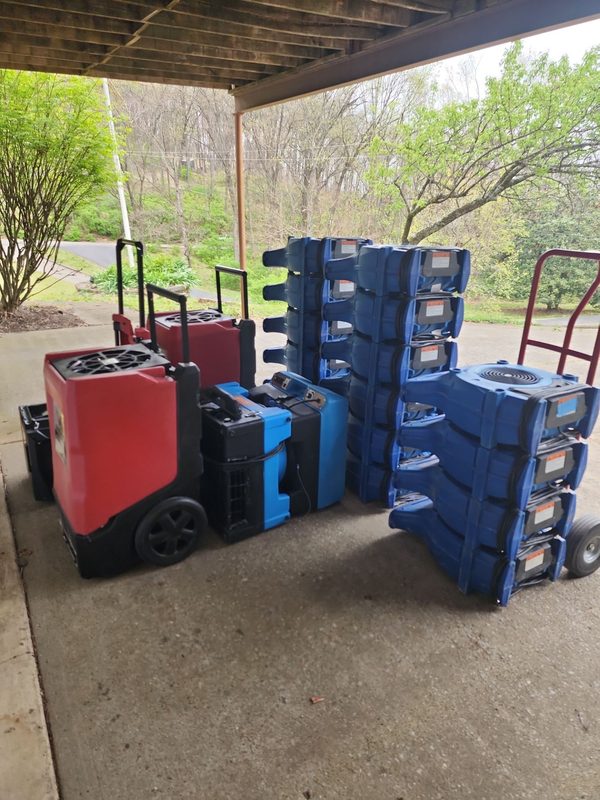
- Keep indoor RH below 60 percent year round. Run a dehumidifier in basements and crawl spaces.
- Vent bathroom exhaust fans all the way through the roof, not into the attic.
- Address any water loss within 24 hours. Past 72 hours, you have a mold remediation, not a water claim.
- Have your HVAC condensate line serviced annually.
Where mold actually grows in Chicago homes
In rank order of how often we find it: behind washing machine supply hoses, in the corner of basement walls below grade, on the back of drywall above bathtubs and showers without functional fans, in the ceiling above an attic air handler with a clogged condensate line, in the toe-kick of kitchen sinks on an exterior wall, in the rim joist of a vented crawl, and inside HVAC ducts that have run wet for a season.
If you have any of those conditions in your home, address them now. They are guaranteed mold over a long enough timeline.
What real S520 remediation looks like
IICRC S520 remediation requires source control, physical containment with negative air pressure, HEPA filtration, removal of all contaminated porous materials, HEPA vacuum and damp wipe of remaining surfaces, and post-remediation verification (PRV) by an independent industrial hygienist on jobs above a defined scope. Anything that skips the containment or the PRV is not S520 compliant, and you should not pay for it.
The bottom line
Mold is a moisture problem first. Control humidity, fix leaks fast, vent bathrooms properly, and you will rarely see it. When you do find it, the EPA 10 square foot rule is your decision point: smaller, you can DIY with proper PPE; larger or behind finishes, call an S520 certified remediator.
See visible mold? Schedule a free inspection at (630) 696-9802.
Call (630) 696-9802