
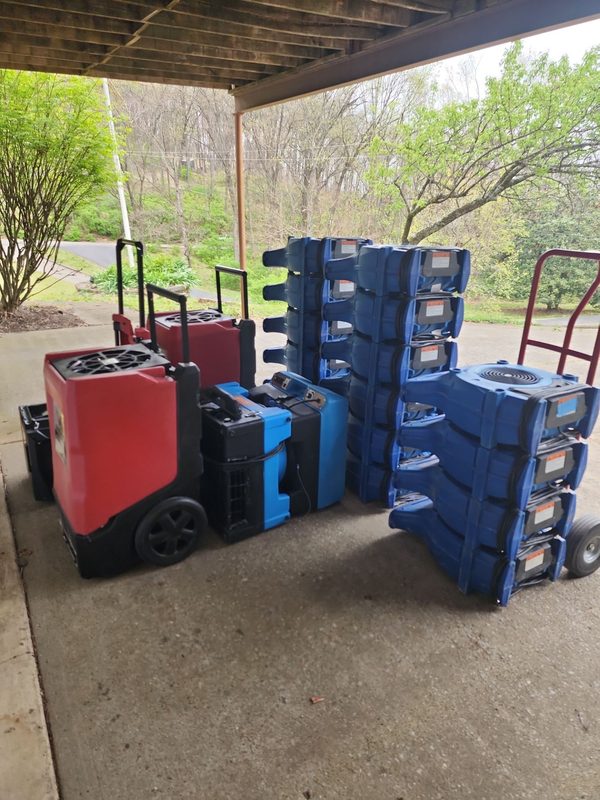
More than 60 percent of Cook County homes built before 2000 sit on vented crawl spaces, and the assumption baked into that design (that outdoor air will dry the space) is wrong about half the year in Illinois's humid continental climate. Warm summer air carries enormous amounts of moisture; when it enters a 60 degree crawl, that moisture condenses on every cold surface, soaking insulation, rotting band joists, and feeding mold colonies that eventually push spores up through the floor system into the living space.
If you have ever noticed a musty smell on the first floor in August, sagging floors over the crawl, or higher than normal humidity readings upstairs, the crawl is the first place to look. This guide covers what humidity actually does down there, the inspection cadence that works, and when encapsulation pays for itself.
The Illinois humidity problem
Chicago summers run 70 to 90 percent outdoor relative humidity for weeks at a time. A vented crawl space pulls that air across cool surfaces (joists, ducts, the underside of subfloor) where it condenses. Wood holds onto that moisture, and once equilibrium moisture content climbs above 16 percent, mold colonizes within days.
The fix is rarely just a dehumidifier. The fix is a thought through assembly: vapor barrier, sealed vents, conditioned space, and continuous monitoring.
What to measure
Put a $30 wireless hygrometer in the crawl space and check it weekly through the summer.
- Relative humidity. Target below 60 percent year round, below 55 percent ideally.
- Temperature. Track the gap between crawl space and conditioned space.
- Wood moisture content. Take a pin meter reading on a joist face. Below 16 percent is safe, 16 to 20 percent is borderline, above 20 percent is active risk.
- Visible water staining, efflorescence on block walls, and any rust on plumbing straps.
When to encapsulate
If your crawl space spends summer above 70 percent RH, no amount of fans will fix it. Encapsulation with a sealed liner, sealed vents, and a dedicated dehumidifier delivers a 50 to 55 percent RH year round and resolves the underlying mold risk.
How the stack effect moves crawl air into your living space
Buildings act like chimneys. Warm air rises out of the upper floors, creating negative pressure that pulls replacement air from the lowest opening, which in most Chicago homes is the crawl space. Studies referenced by the U.S. Department of Energy show that 30 to 50 percent of the air you breathe upstairs originated in the crawl. If the crawl smells musty, your indoor air does too.
Encapsulation done right in Illinois's climate
A proper Chicago crawl encapsulation seals the vents, lines the floor and walls with at least 12 mil reinforced vapor barrier, mechanically attaches the wall liner, seals all penetrations, insulates the rim joists, and adds a dedicated crawl-rated dehumidifier sized to the cubic footage. Anything less (especially the partial encapsulations with thin black plastic and no dehumidifier) is a waste of money in our climate.
The bottom line
Your crawl space is part of your living environment whether you treat it that way or not. In Illinois's climate, ventless encapsulation with active dehumidification is the only strategy that works year-round, and the IAQ improvements upstairs are usually noticed within a week.
Concerned about crawl space mold? Schedule a free assessment at (630) 696-9802.
Call (630) 696-9802