
Chicago has roughly 130 miles of combined sewer system, most of it under the older neighborhoods inside the I-294 loop. During heavy rain, the system surcharges, and when the public main reaches capacity faster than your private lateral can carry away your wastewater, sewage backs up through the lowest connection in your building. In Lincoln Park, Logan Square, Pilsen, Garfield Park, and most of the original Chicago grid, that lowest connection is a basement floor drain or laundry standpipe.
Sewer backups are not just water damage. Under IICRC S500, they are Category 3 black water, which means contaminated materials must be removed rather than dried in place. This guide covers why it happens in older Chicago neighborhoods, how to prevent it, and what Category 3 cleanup actually involves.
Combined sewers and surcharge
Significant sections of older Chicago still use combined sewers, where storm runoff and sanitary waste share the same main. During intense rain, the main surcharges and pushes sewage back up through the lowest connection in your building, typically a basement floor drain or laundry standpipe.
Category 3 means contaminated
Under IICRC S500, sewage is Category 3 black water. It contains bacteria, viruses, and parasites. Porous materials that contact Category 3 water (drywall, carpet, pad, particleboard) are removed, not dried in place. PPE and HEPA filtration are mandatory.
Protection
- Install a backwater valve on your sanitary lateral. A licensed Chicago plumber can usually do this in a day.
- Confirm your homeowner policy includes a sewer and water backup endorsement (most Illinois policies cap this at $10K to $25K).
- Never store irreplaceable items directly on a basement floor in flood prone or combined sewer neighborhoods.
Combined sewers and what the city is doing about them
The MWRD Deep Tunnel and Reservoir Plan (TARP), substantially completed with the McCook Reservoir, was built specifically to reduce combined sewer overflows. The tunnel captures stormwater volume that would otherwise surcharge neighborhood mains. The project has dramatically reduced overflow events into the Des Plaines River and the volume of in-home backups, but during truly extreme rain (multi-inch one hour bursts) the older neighborhoods still see backups.
How professional Category 3 cleanup is sequenced
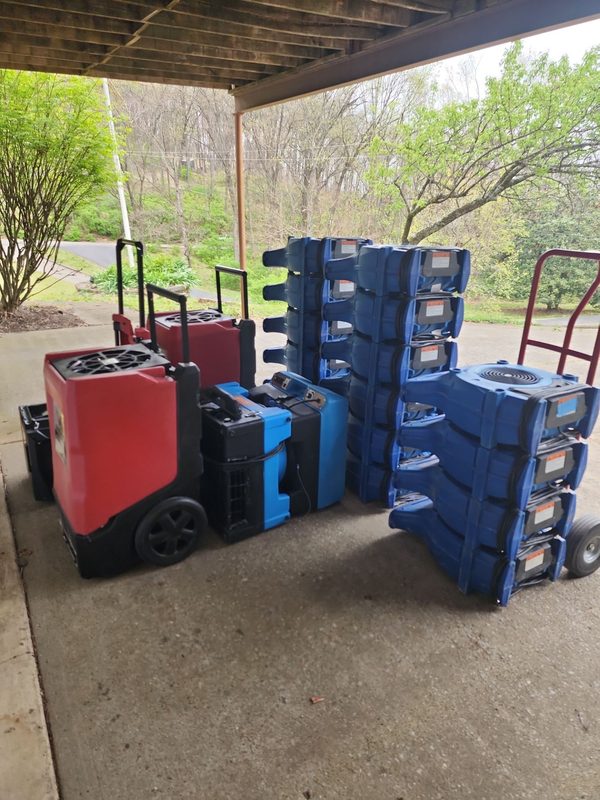
Crews arrive in full PPE: tyvek, respirators, gloves, eye protection. The contaminated water is extracted, all affected porous materials (drywall to a defined height, carpet, pad, particleboard cabinetry, contents that contacted the water) are removed and discarded per Illinois EPA solid waste rules, surfaces are HEPA vacuumed, then cleaned with detergent, then disinfected with an EPA List N product. Structural drying follows. Post-cleanup, an independent industrial hygienist can verify the space is safe to rebuild and reoccupy.
The bottom line
If you own an older Chicago home inside the I-294 loop, sewer backup risk is real, the cleanup is non-trivial, and the prevention (backwater valve plus the right insurance endorsement) is inexpensive compared to the loss. Address both before the next four inch rain event.
Sewage in your basement? Call IRS Chicago 24/7 at (630) 696-9802.
Call (630) 696-9802